How to Choose the Right Siding: Materials, Costs & Durability
Deciding how to choose the right siding for your home comes down to three things: how well a material holds up in Colorado's climate, how long it lasts before it needs replacing, and how much maintenance you are willing to take on.
For most homeowners in Colorado Springs, that decision comes down to vinyl, composite, or steel siding, since all three perform well against hail, sharp temperature swings, and intense mountain sun. Vinyl costs less and needs almost no upkeep. Steel and composite cost more upfront, but resist impact damage better and typically last longer.
Your final decision depends on your budget, how long you plan to stay in the home, and how much hail your neighborhood tends to see each summer. This guide covers our siding replacement services, every siding option available, the warning signs that your current siding is failing, and what actually happens if you need to file an insurance claim after a storm.
What This Guide Covers
This guide explains:
- What siding material options are available for your home
- What signs mean your siding needs attention
- How long does siding actually last
- How vinyl, composite, and steel siding compare
- How Colorado hail affects home siding
- What to expect from the insurance claims process
- How siding colors and styles affect curb appeal
What Are My Siding Material Options?
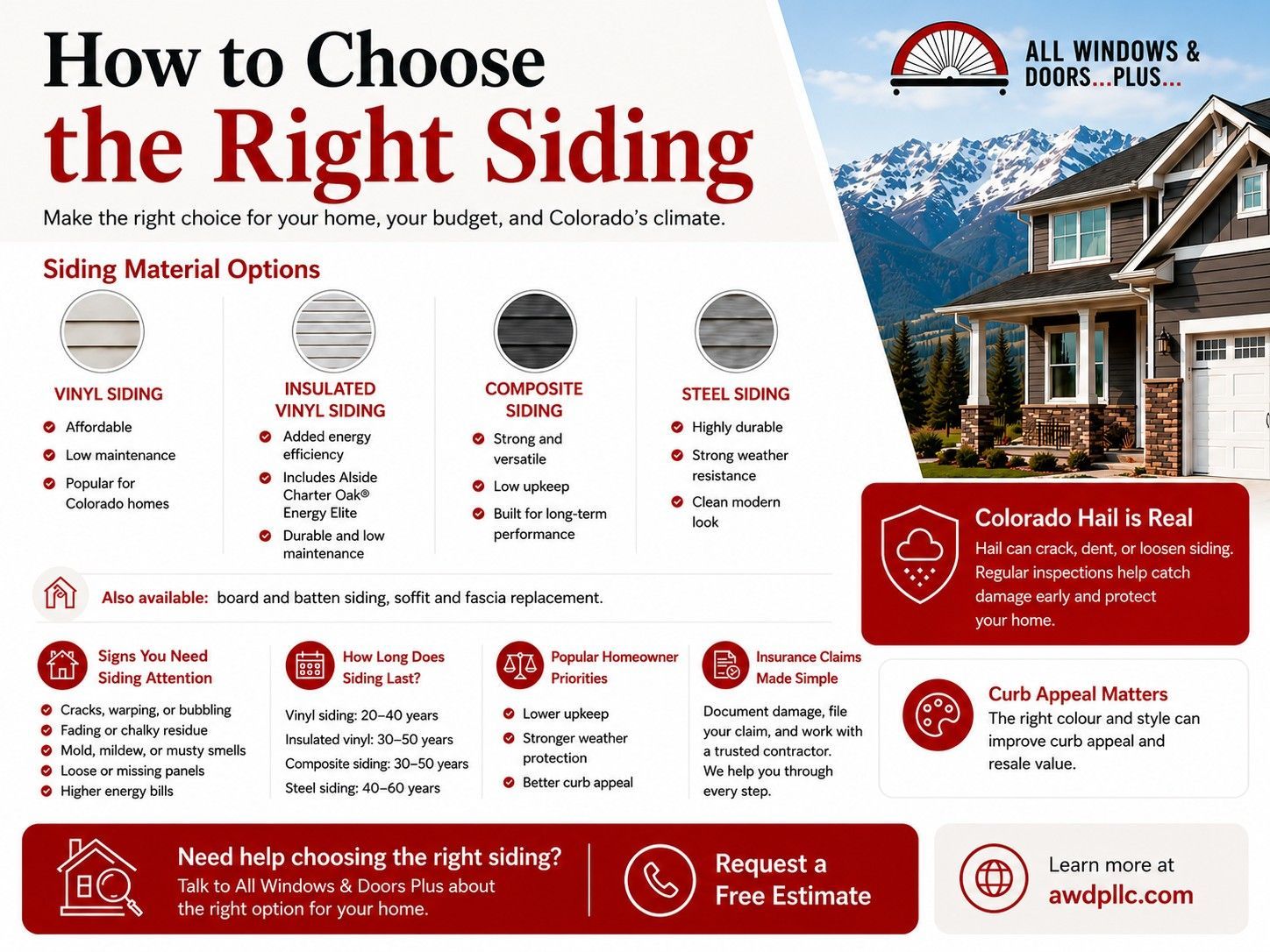
Homeowners today have more choices than a simple vinyl-or-nothing decision. Understanding the types of siding materials available helps you weigh cost against durability before committing to a project.
Vinyl Siding
- Vinyl siding is the most widely installed option in the country. It is made from PVC plastic, comes in dozens of colors and textures, and never needs painting or staining.
Insulated Vinyl Siding
- Insulated vinyl siding, such as Alside's Charter Oak Energy Elite, adds a layer of rigid foam behind the panel. That foam backing improves energy efficiency and adds impact resistance compared to standard vinyl, making it a strong option in a hail-prone climate.
Composite Siding
- Composite siding blends engineered materials for a look similar to wood or vinyl with added durability. It typically holds up well to impact and weather while requiring less upkeep than natural wood.
Steel Siding
- Steel siding is the most impact- and fire-resistant option we install. It resists denting, cracking, rot, and insects far better than vinyl or composite, though it comes at a higher price point.
Board and Batten Siding
- Board and batten styles, including ASCEND products, are often used as an accent rather than covering an entire home, adding texture around gables, entryways, or dormers. These are available in multiple profiles, pairs well with vinyl for accent areas, and makes gables, entry areas and garages surrounds pop.
We also handle soffit and fascia replacement, which is often needed alongside a full siding project to protect the roofline from moisture and pests. All siding products we install carry a lifetime transferable warranty, offering protection that stays with your home even if you sell it.
Signs Your Siding Needs Attention
Not every problem calls for a full replacement, but ignoring the wrong ones can lead to expensive repairs down the road. Here are the most common signs your siding needs attention:
- Visible cracks, warping, or bubbling on panels
- Fading or chalky residue that will not wash off
- Peeling paint or wallpaper on interior walls, which often points to moisture getting in behind the siding
- Mold, mildew, or a musty smell near exterior walls
- Loose, warped, or missing panels after a storm
- A noticeable increase in heating or cooling bills
Suppose you are wondering how to know if siding needs replacing versus simply needing a repair. The size and location of the damage matter. A single cracked panel from a stray baseball is usually a repair. Widespread cracking, warping across multiple walls, or moisture damage behind the siding usually means it is time to replace the whole section, or in some cases, the entire exterior.
How Long Does Siding Actually Last?
How long siding lasts depends heavily on the material and how well it was installed. As a general guide:
- Vinyl siding: 20 to 40 years
- Insulated vinyl siding: 30 to 50 years
- Composite siding: 30 to 50 years
- Steel siding: 40 to 60 years
Several factors shorten these lifespans faster than expected. Intense, direct sun exposure fades and weakens vinyl over time. Poor installation, such as panels nailed too tightly or without proper spacing for expansion, causes buckling well before its time. And in Colorado Springs specifically, repeated hailstorms are one of the biggest factors that cut a siding's useful life short, regardless of the manufacturer's stated lifespan.
Regular maintenance stretches these numbers in the right direction. Rinsing siding once or twice a year removes dirt and pollen that trap moisture against the surface. Trimming back bushes and tree branches keeps panels from getting scratched or gouged. And catching small issues, like a loose panel or a hairline crack, before winter sets in prevents a minor fix from turning into water damage behind the wall.
Vinyl, Composite, and Steel Siding: A Simple Comparison
Vinyl, composite, and steel make up the siding options we install, and each one hits a different point on the cost-versus-durability scale. The table below breaks down how they compare on the factors that actually drive most homeowners' decisions: price, hail resistance, lifespan, and upkeep.
| Factor | Vinyl Siding | Composite Siding | Steel Siding |
|---|---|---|---|
| Average cost (installed) | $10 to $12 per sq. ft. | $14 to $20 per sq. ft. | $14 to $20 per sq. ft. |
| Hail resistance | Moderate, can crack or dent | Good, more impact-resistant than vinyl | Excellent, highly dent- and impact-resistant |
| Lifespan | 20 to 40 years | 30 to 50 years | 40 to 60 years |
| Maintenance | Minimal, occasional washing | Low, occasional cleaning | Very low, resists rot and insects |
| Fire resistance | Lower, can melt or warp | Moderate | High, noncombustible |
| Best for | Budget-conscious projects | Balanced durability and style | Maximum durability in severe weather |
Cost ranges are national averages for materials and installation combined, and vary by region, home size, and project scope. Get a local quote for an accurate number.
Vinyl remains the most popular choice for its low cost and near-zero upkeep. Composite is a strong middle ground if you want more durability without the highest price tag. Steel makes the most sense for homeowners who want maximum protection against hail and severe weather and are willing to pay more upfront for it.
How Colorado Hail Affects Siding
Colorado Springs sits in one of the most hail-prone regions in the country, and siding takes the brunt of it during a bad storm. Understanding how hail affects home siding helps you know what to look for after a storm rolls through.
According to the National Weather Service, this region, often called "Hail Alley", sees an average of seven to nine hail days a year, one of the highest frequencies anywhere in North America.
Hail impact can cause:
- Cracks or splits in vinyl panels, especially in cooler weather when the material is more brittle
- Dents or impact marks on insulated vinyl and composite panels, though the foam backing on insulated vinyl helps absorb some impact
- Denting or surface scuffs on steel panels, though it takes a very large hailstone to leave a visible mark
- Loosened panels where fasteners were knocked out of place on any material
Damage is not always obvious from the ground. Small cracks and dents are often only visible on close inspection, which is why it is worth having your siding checked after any significant hailstorm, even if nothing looks wrong from the street.
Understanding the Insurance Claims Process
The siding material you choose does not just affect your upfront cost and maintenance; it also affects how often you are likely to file a claim and how straightforward that claim will be. Vinyl is more prone to cracking on impact, which means more frequent, smaller claims over time. Steel and insulated vinyl resist hail better, which can mean fewer claims and less back-and-forth with an adjuster over the life of your siding.
Understanding your siding insurance coverage and the claims process ahead of time, no matter which material you choose, makes the whole experience less stressful.
Wind and hail damage is one of the most common reasons homeowners file a claim at all. According to the Insurance Information Institute, about one in 36 insured homes file a property damage claim related to wind or hail every year. Here is generally how the process works, regardless of which siding you have:
- Document the damage. Take photos and, if possible, note the date of the storm.
- Contact your insurance company to open a claim.
- An adjuster will visit your home to inspect the damage and determine if it is covered.
- Get an estimate from a licensed contractor. A second, independent estimate helps confirm that the adjuster's findings are accurate, and matters more for less impact-resistant materials like standard vinyl, where hail damage can be subtle.
- Once the claim is approved, your insurer issues payment, typically in two parts: an initial payment and a final payment once the work is complete.
Most standard homeowner's policies cover hail damage, but coverage details vary. It is worth reviewing your policy's deductible and any depreciation clauses before a storm hits, so there are no surprises when you actually need to file a claim. Some insurers also offer premium discounts for impact-resistant materials like steel or insulated vinyl, which is worth asking about if durability against hail is a priority in your siding decision.
Haven has helped dozens of Colorado Springs homeowners navigate the claims process, and that can make a real difference. Whatever material is on your home. They know what documentation adjusters look for, can point out damage an untrained eye might miss, and can write an estimate that matches the scope insurers expect to see. That reduces back-and-forth and gets the repair or replacement moving faster.
Siding Colors and Styles for Curb Appeal
Beyond durability, siding is one of the biggest visual elements of your home's exterior. Choosing the right color and style has a real effect on siding curb appeal and can influence resale value.
Popular Color Trends
Neutral tones like warm grays, soft beiges, and classic whites remain the most popular choices because they age well and pair with almost any roof or trim color. Deeper tones like navy, charcoal, and forest green have grown in popularity for homeowners wanting a bolder look, especially paired with white or black trim for contrast.
Color and Finish Options by Material
Vinyl and insulated vinyl offer the widest range of colors and finishes at the lowest cost. Composite siding tends to come in richer, more textured wood-grain finishes for a more upscale look. Steel siding is typically available in a smaller color range but holds its finish the longest, since it will not fade or chalk the way vinyl can over time.
Texture and Style
Smooth panels give a clean, modern look, while wood-grain textured panels add warmth and a more traditional feel.
Mixing Materials for Accent Details
Pairing a primary siding material with a specialty accent, such as board-and-batten around a garage or entryway, is one of the simplest ways to add dimension without redoing the entire exterior. You can browse our completed siding projects to see how these choices look on real homes in the area.
Frequently Asked Questions About Siding
How do I know if my siding needs replacing?
Widespread cracking, warping, or fading across multiple areas usually means it's time to replace, not repair. A single damaged panel, moisture stains on interior walls, or a noticeable jump in energy bills are the clearest signs to watch for. A single damaged panel is usually a repair, but damage spread across the home typically means it is time for a full replacement.
What is the real difference between vinyl, insulated vinyl, composite, and steel siding?
Vinyl siding costs the least and needs almost no maintenance, and weighing vinyl siding pros and cons against the other three often comes down to budget. Insulated vinyl siding adds a foam backing for better energy efficiency and impact resistance at a modest price increase. Composite siding offers a more upscale look with strong durability. Steel siding costs the most but resists hail, dents, and fire better than the other three combined. All four options installed by All Windows & Doors Plus carry a lifetime transferable warranty
How long does siding last, and how long does a full replacement take?
How long siding lasts depends heavily on the material and installation quality, ranging from 20 years for vinyl to 60 years for steel. The replacement itself is much quicker: most residential siding replacement projects take one to two weeks, depending on the size of the home, the material chosen, and weather conditions during installation.
Will my insurance cover hail damage to my siding?
Most standard homeowner's policies cover hail damage, but the coverage amount, deductible, and depreciation clauses vary by policy. It is worth reviewing your siding insurance coverage or asking your contractor to help document the damage for your claim.
What is the best siding color for resale value?
Neutral tones like gray, beige, and white tend to appeal to the widest range of buyers and rarely go out of style, making them a safe choice among the best siding colors for siding curb appeal and resale value.
Can new siding be installed over my existing siding?
In some cases, yes, but it is not always the right call. Installing over old siding can trap moisture underneath and hide structural problems that need attention first. A brief inspection during your estimate will tell you whether a direct overlay is safe or whether the old siding needs to come off first.
Is insulated vinyl siding worth the extra cost over standard vinyl?
For most homeowners in colder climates, yes. The added energy efficiency typically offsets part of the price difference over time through lower heating and cooling costs, and the foam backing adds meaningful impact resistance against hail compared to standard vinyl.
Need Help Choosing the Right Siding?
Ultimately, how to choose the right siding comes down to matching a material's cost, durability, and upkeep to how you actually plan to use your home. If you are weighing your options or dealing with storm damage right now, All Windows & Doors Plus has helped Colorado Springs homeowners through this decision for years, from material selection to insurance paperwork. Every siding product we install carries a lifetime transferable warranty, so your investment is protected long after the job is done. Reach out directly to request a free estimate and get a straightforward answer about what your home actually needs.
Financing is also available through Synchrony for qualified homeowners.
Share this Article